Why this exists
Construction information is fragmented across BIM models, drawings, schedules and visual project context. A chat-only architecture can hide provenance or hallucinate facts. This workbench keeps natural language as the interaction layer while controlled domain execution remains the factual layer.
Architecture
The public repository uses a shared typed QueryPlan contract for deterministic and bounded semantic planning. Capability gates reject unsupported operations before tools run. Python and IfcOpenShell compute bounded BIM facts; visual models interpret drawing or viewer pixels without replacing structured IFC computation.
Key capabilities
Rules and a bounded semantic planner produce the same typed plan contract.
Unsupported operations are rejected before controlled tools execute.
Python and IfcOpenShell handle counts, grouping and bounded height extrema.
A narrow, explicitly scoped capability joins BIM quantities against a drawing schedule and reports matches, dimension mismatches and omissions per item — every other cross-source request remains declined.
Engineering drawings and current-view snapshots remain explicit source modes.
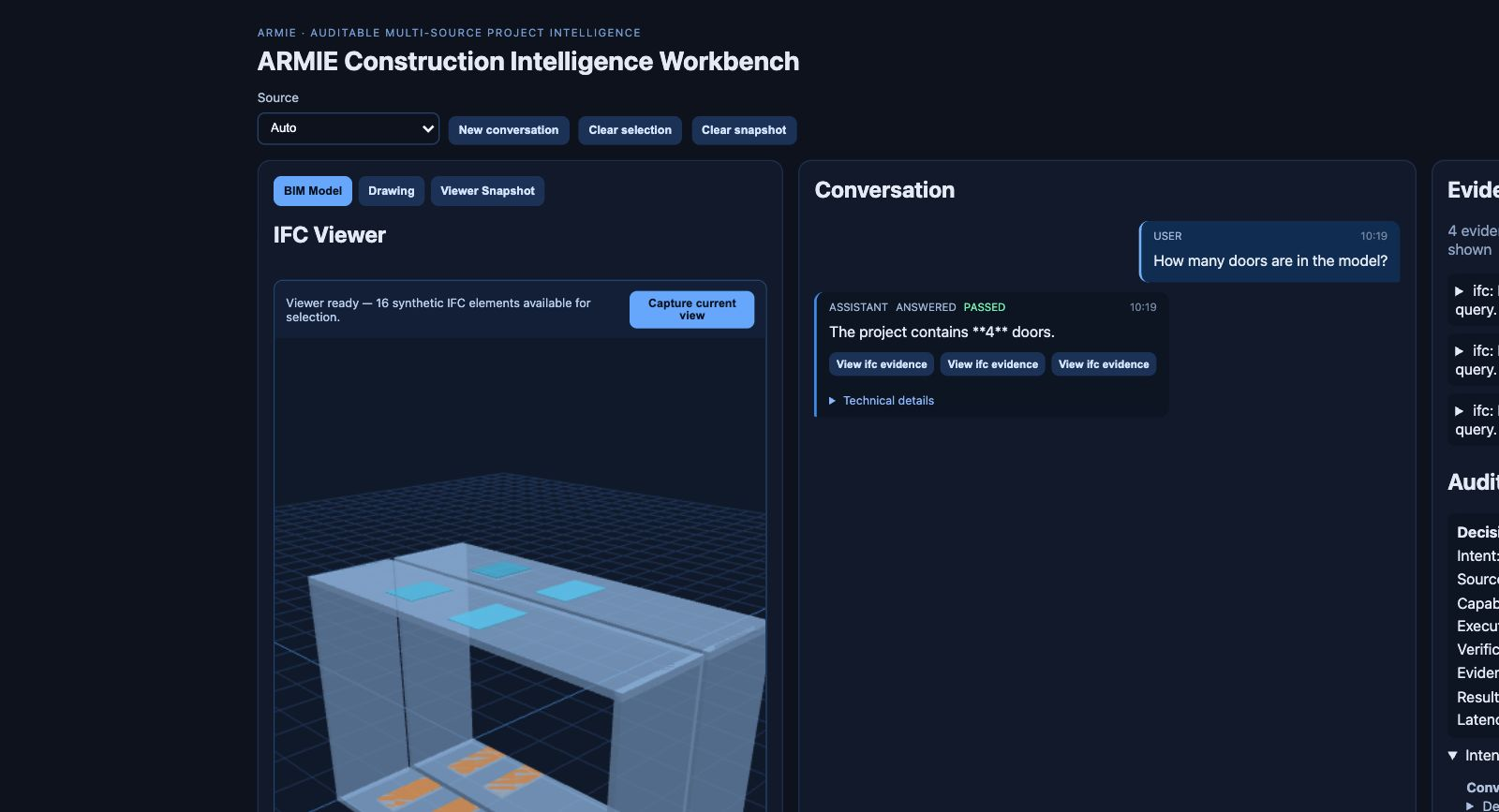
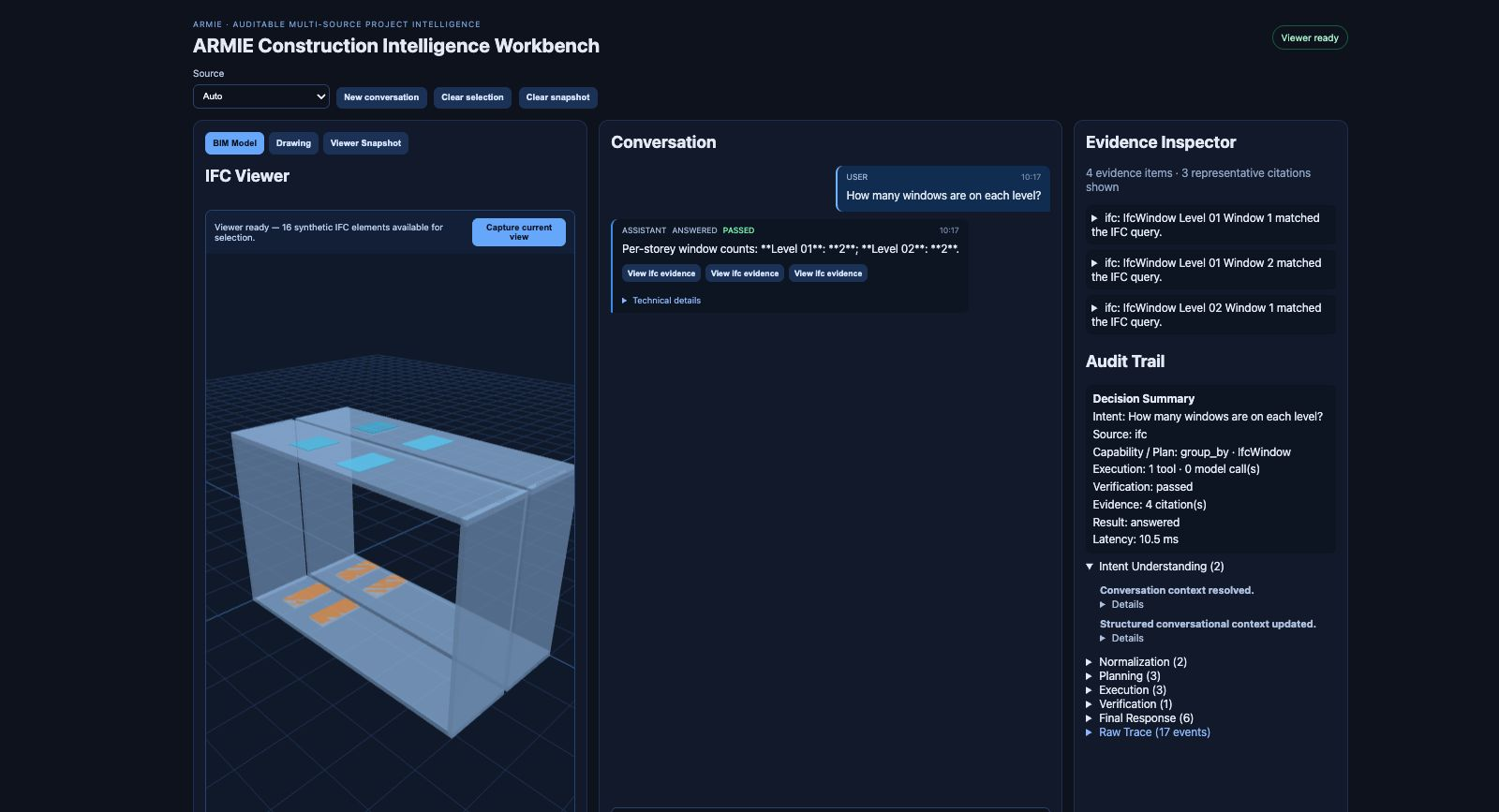
Results carry IFC identities, PDF pages, regions or other source locators.
Answer shape, evidence presence and dispositions are checked before presentation.
Planning, execution, verification and final response stages remain traceable.
Implementation evidence
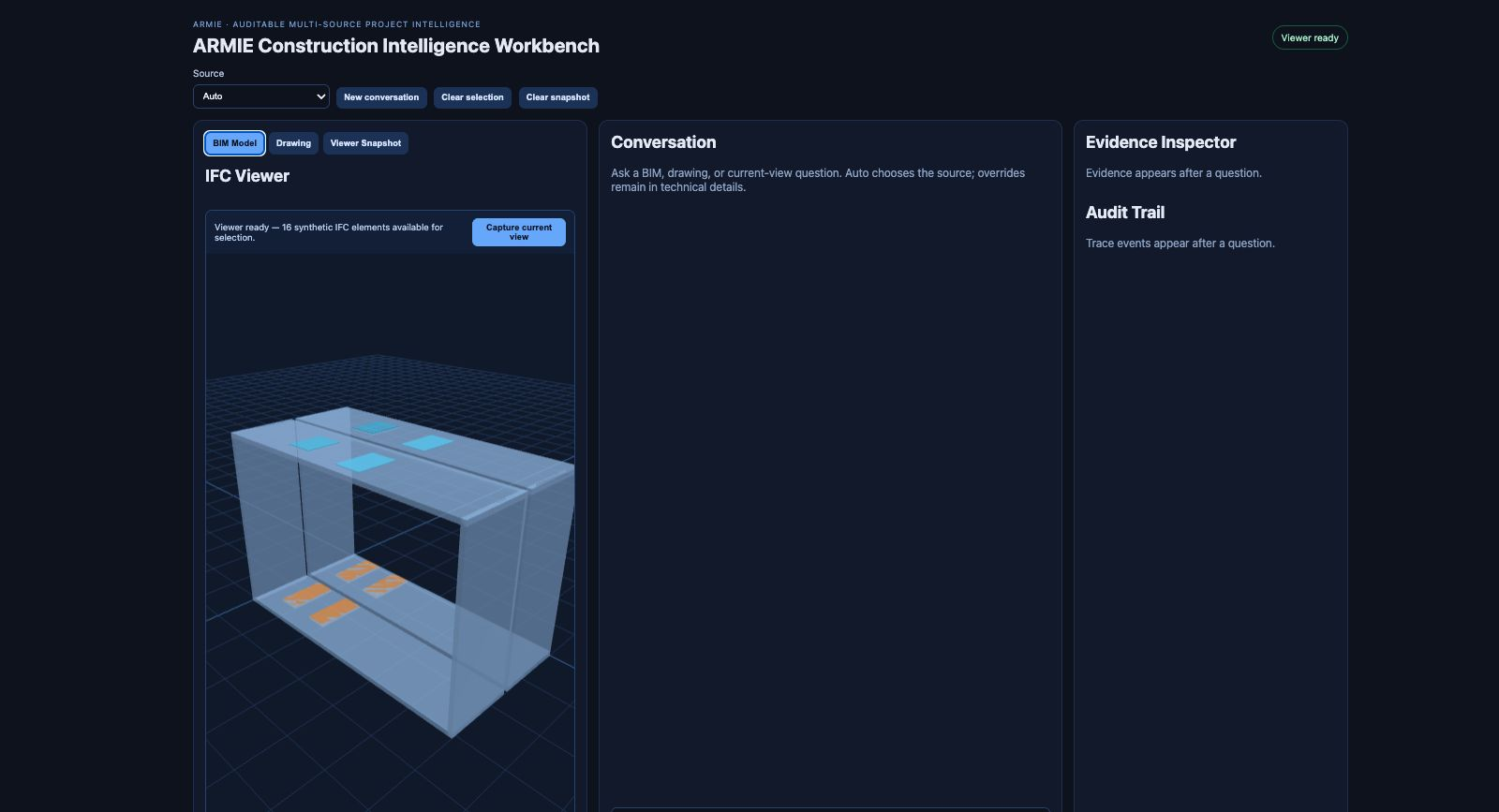
The screenshots below are from the public repository's synthetic fixtures. They show the workbench as an inspectable reference implementation, not a hosted product or production service.
Current scope and maturity
This is a public ARMIE AI Labs reference implementation with one active local project workspace, a bounded BIM query surface, synthetic BIM/PDF fixtures and multimodal viewer/drawing workflows. It is not production SaaS, a hosted enterprise product, a compliance engine, a multi-tenant platform or an unrestricted BIM reasoning system.
The workbench does not claim large-scale throughput, autonomous geometry exploration, arbitrary property language or perfect visual correctness. Cross-source reconciliation is limited to one explicitly scoped case — door and window quantities checked against a drawing schedule; every other cross-source request is still declined by design.